
How to remove stuck nozzle off garden hose without damaging it? It is a challenging task. You will need tools, un-stuck methods, and execution of the proper technique to remove the nozzle stuck on the hose.
In this article, we will highlight the step-by-step guide, reasons for a nozzle to get stuck, materials and tools needed, and tips to avoid this problem. Let’s get started!
Removing a Stuck Hose Nozzle: What You Need to Know
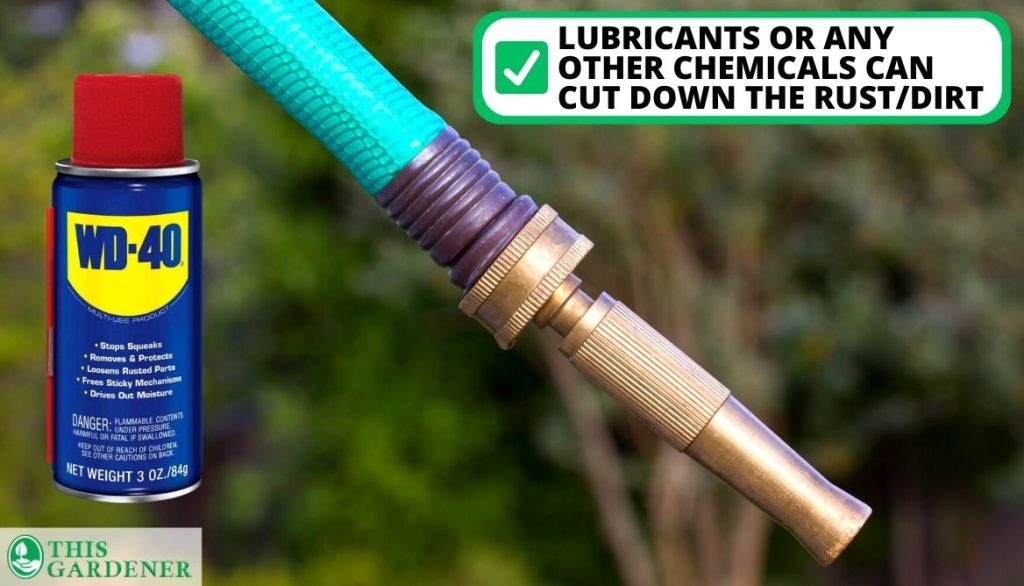
You will face difficulty removing the hose nozzle but this problem can be solved. Using specific tools that are mentioned below. You can also opt for an easier way by using lubricants or any other chemical that can cut down the rust/dirt.
Stuck Hose Nozzle Explained!
It means that even if you turn on the hose it does not discharge water. The hose nozzle may have something jammed in it that is not letting the water pass through and exit the hose. In such a scenario, it is mandatory to resolve the issue and unclog it.
Nozzle Getting Stuck in Garden Hose Issues
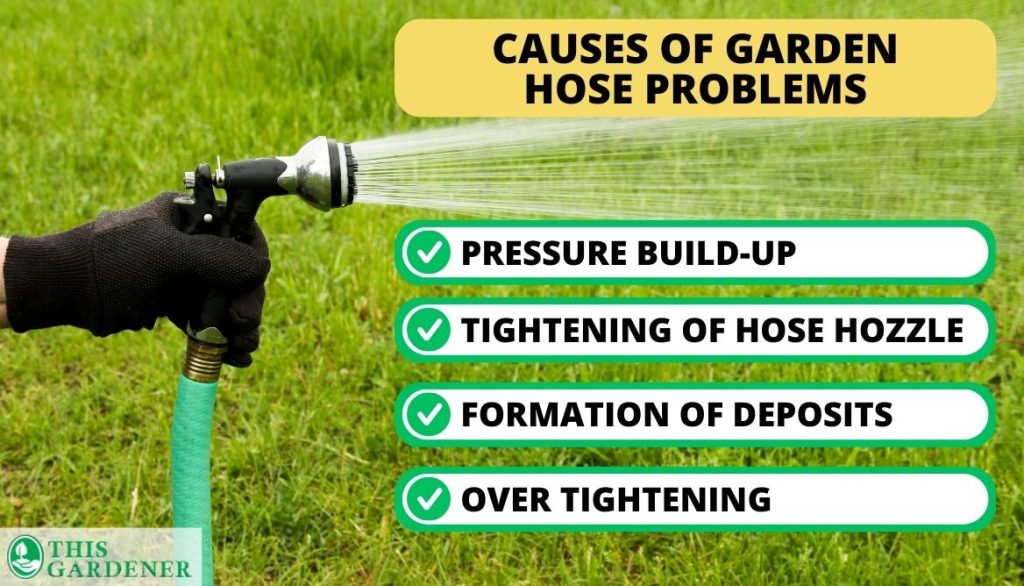
Multiple reasons cause issues with a garden hose. Here is a list of some of the reasons!
[su_list icon=”icon: check” icon_color=”#00cf77″]
- Pressure Build-Up: Water pressure build-up can result in the hose getting stuck.
- Tightening of Hose Hozzle: Rust on the threads, dirt, or any other type of debris can tighten the hose nozzle.
- Formation of Deposits: Corrosion can result in deposits that can cause this issue.
- Over Tightening: You may have over-tighten the hose fitting.[/su_list]
A Step-by-Step Guide On Removing Stuck Nozzle Off Garden Hose
Removing a stuck garden hose requires skill and technique. You need some tools and the proper guide to achieving this without damaging it. Let’s have a look at the things we need and the process!
Equipment Required
To remove or unstuck the nozzle from a garden hose you may need:
[su_list icon=”icon: check” icon_color=”#00cf77″]
- Hammer
- Pipe wrenches
- Blow dryer or hot water
- Lubricant
- Safety gloves (leather gloves)
- Plier
- Hair dryer
- Optional: Hacksaw, vinegar, lime, Petroleum based lubricant[/su_list]
Steps for Removing Garden Hoses/Nozzle
Removing a nozzle from the stuck garden hoses may seem like a simple feat but it can become challenging if the nozzle gets stuck. It can be annoying and removing it without damaging the nozzle or the hose requires skillful work.
Below are the steps that can help to unstick it without causing any damage. Let’s get started!
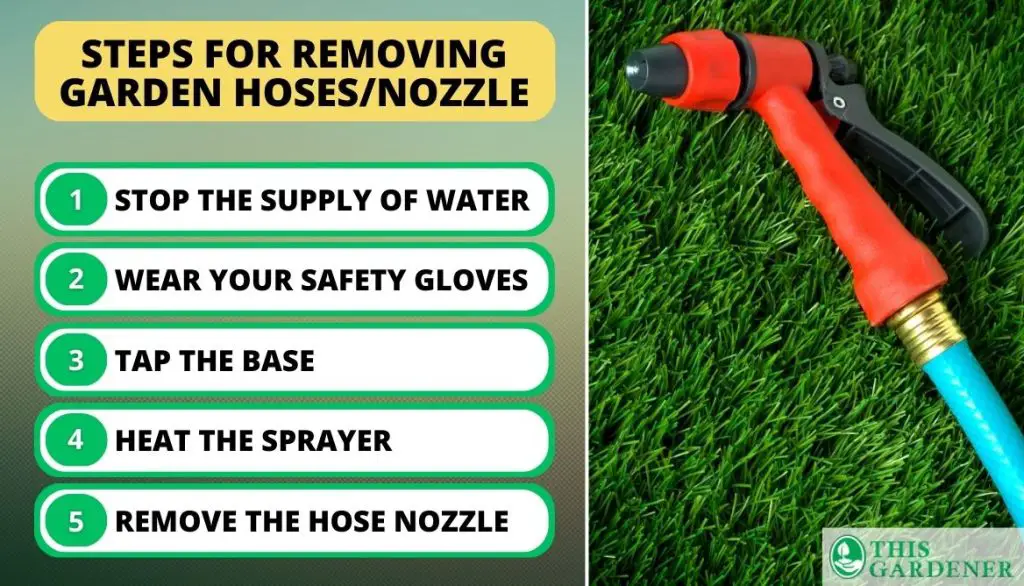
1. Stop the Supply of Water
Before you start doing anything with the hose, you need to cut off the water supply. There may be pressure buildup or debris stuck in it.
To avoid further blockage or splashes this is a major step. If you are using a high-pressure hose then this is very important as unscrewing without doing this can make it a difficult process.
2. Wear Your Safety Gloves
Protective gear is a must and there are no compromises on safety of any kind.
[su_list icon=”icon: chevron-circle-right” icon_color=”#00cf77″]
- In this case, you need safety gloves while using the tools to remove the nozzle and connectors.
- After putting on some gloves, use a plier and start to unwind the base of the nozzle.[/su_list]
[su_note note_color=”#64F57D” text_color=”#000000″]Pro tip: Usually turning the pliers in the left direction loosens the hose end connectors.[/su_note]
3. Tap the Base
Corrosion is one reason that the connectors may be stuck.
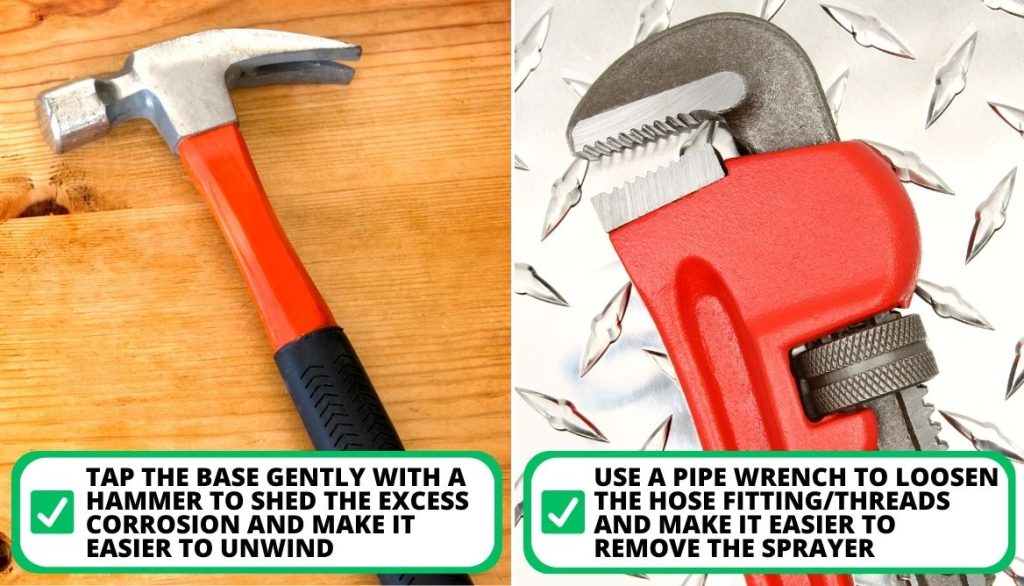
Using a Hammer
Gently tap on the base with a hammer and ensure you do not hit it too hard. Tapping it with the hammer to shed the excess corrosion and make it easy to unwind.
Pipe Wrench
Another great trick is to use a pipe wrench to turn the connectors clockwise and anti-clockwise. This will loosen the hose fitting/threads and make it easy to remove the sprayer.
4. Heat the Sprayer
An easy way for loosening the hose fitting and the nozzle is by applying heat to it.
[su_list icon=”icon: chevron-circle-right” icon_color=”#00cf77″]
- You can use a hair dryer for this purpose or simply boil water and slowly pour it on the fittings/connectors of the hose end.
- Applying heat contracts the metal, making space between the threads, and helps to turn the connector with the wrench with minimum effort.
- Check if the base is heated, now be careful and unscrew the remaining components by hand, pipe wrenches, or pliers.[/su_list]
5. Remove the Hose Nozzle
It is possible that dirt, debris, or corrosion might be jamming the threads. Follow these tips to remove the hose nozzle:
[su_list icon=”icon: chevron-circle-right” icon_color=”#00cf77″]
- Applying some lubricants can help to loosen the nozzle.
- Spray some WD-40 (rust remover) on the hose end and let it dry.
- If you do not have a lubricant then squeeze a lime as an alternate.[/su_list]
[su_note note_color=”#64F57D” text_color=”#000000″]Tip: Always let the lubricant dry before doing anything.[/su_note]
You can also watch this video for further help.
Alternatives to Remove a Stuck Nozzle Off Garden Hose
If the above-mentioned methods do not work for you then there are other simple tricks that can remove the nozzle from the garden hoses. Read on and learn it!
Removing a Hose by Twisting
To remove stuck hose end fittings, use two tongue-and-groove pliers or two wrenches (pipe) to gently twist the fitting.
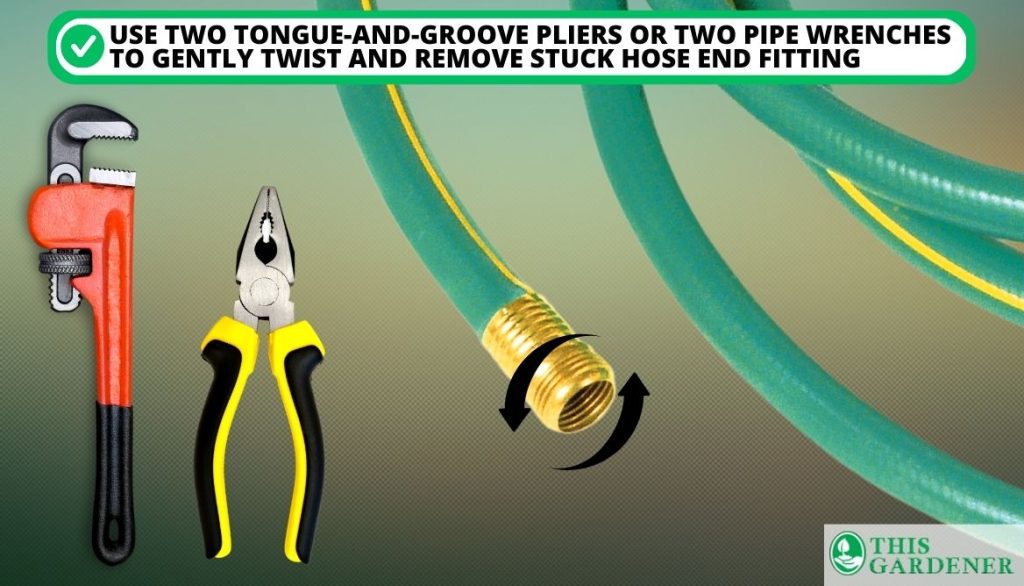
Avoid damaging the spigot by holding it securely with the other tool and adjusting the tool so all three edges rest against the hose fitting. Apply lubricants, rust-busting products, or heat from a heat gun or hair dryer to help loosen the grip.
Removing a Hose Using a Hacksaw
If the hose fitting is stuck, use a hacksaw as a last resort to cut it at a 45-degree angle, being careful not to cut too deeply and avoid damaging the threads on the spigot. Create enough of a slot to insert a screwdriver and pry out the fitting to twist it off.
How to Avoid the Problem
Follow these important tips to avoid any inconveniences:
[su_list icon=”icon: check” icon_color=”#00cf77″]
- Aluminum corrodes from moisture so removing the hose from the fittings at least 2-3 times a year will help you prevent this issue.
- Choose brass fittings as they do not corrode resulting in the hose not getting stuck.
- Upgrade your hose end and spigot by installing a “quick connect device”! Now you can snap the hose into the spigot with just a push-and-click system.
- There are no threads or fittings to tighten there is no deposit of debris in between.[/su_list]
[su_note note_color=”#64F57D” text_color=”#000000″]Pro tip: Choose quick-connect devices made of stainless steel as they are more resistant to corrosion.[/su_note]
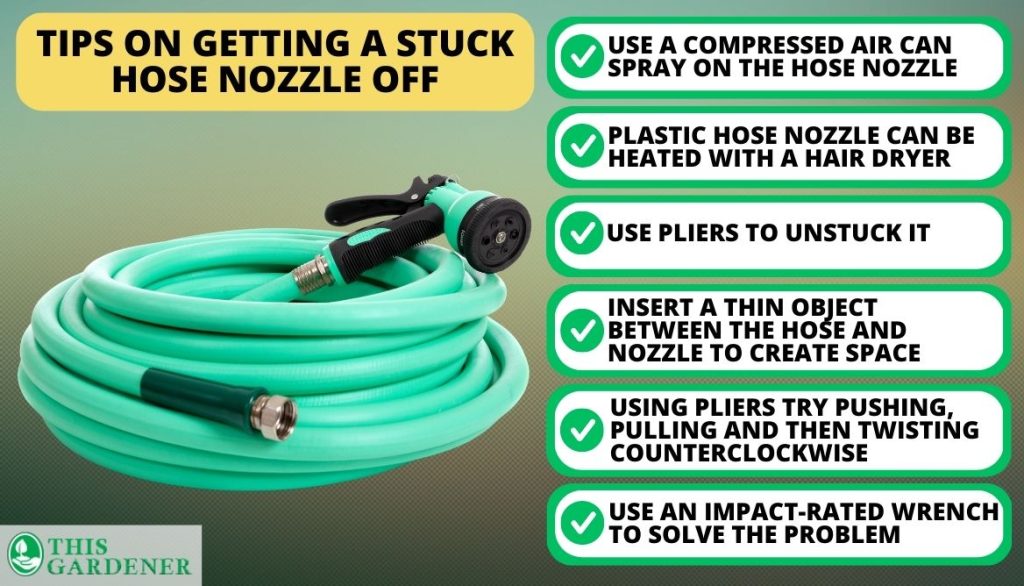
Important Tips on Getting a Stuck Hose Nozzle Off
Here is a list of tips that will help you to resolve a stuck hose nozzle problem. Let’s check it out!
[su_list icon=”icon: check” icon_color=”#00cf77″]
- Use a compressed air can spray on the hose nozzle. The cool air will contract the metal and make space to turn it.
- If the hose nozzle is made from plastic then heating it with a hair dryer will do the trick. The plastic will expand allowing you to easily twist and turn it.
- Make use of pliers to unstuck it. Put a piece of cloth around the hose side for a firm grip and then twist it counterclockwise.
- Insert a thin object or a utility knife between the hose and nozzle then apply gentle pressure to try to create some space.
- Try applying pressure by pulling and then twisting it counterclockwise with pliers.
- Use an impact-rated wrench to solve the problem. Attach it to the hose end and apply pressure to twist it open.[/su_list]
FAQ
How do you open a stuck garden hose?
How do you loosen a garden hose connector?
How do you get a stuck nozzle off a garden hose?
It is easier if you use a lubricant to remove any rust or debris between the windings. Lastly, heating the pipe can expand the connector and loosen the connection from any obstructions.
What happens if you leave the water hose on with a nozzle?
What can damage a hose?
Conclusion
There are multiple factors that result in a stuck, clogged, or jammed hose and nozzle. Replacing the hose end and nozzle is challenging although using a pair of locking pliers handy work is made easy.
Be careful. metal can cause injury so wear something to protect yourself while using pliers on the thread or trying to replace any component. How did you remove the nozzle? Which method best suited your problem? Let us know in the comments section.
Leave a Reply