
Are you a beginner in gardening and struggling with how to start a tiller with a choke? Starting a tiller can be tricky, but it’s an essential skill for any gardener. In this article, we’ll guide you through the process in a few easy steps.
We’ll also discuss some common issues that you may encounter and offer solutions to help you get your tiller up and running. So, let’s get started and learn the best way to start a tiller like a pro!
The Basics of Tiller: What You Need to Know
A tiller is a gardening tool that cultivates the soil, typically used to prepare it for planting. The tool consists of a set of rotating blades or tines that break up the soil, making it easier to work with and improving its nutrient content. Using a tiller has numerous benefits such as:
[su_list icon=”icon: check” icon_color=”#00cf77″]
- Breaking up compacted soil
- Mixing in organic matter
- Controlling weeds and pests
- Creating a level surface for planting
- Improving water usage efficiency
- Increasing crop yield[/su_list]
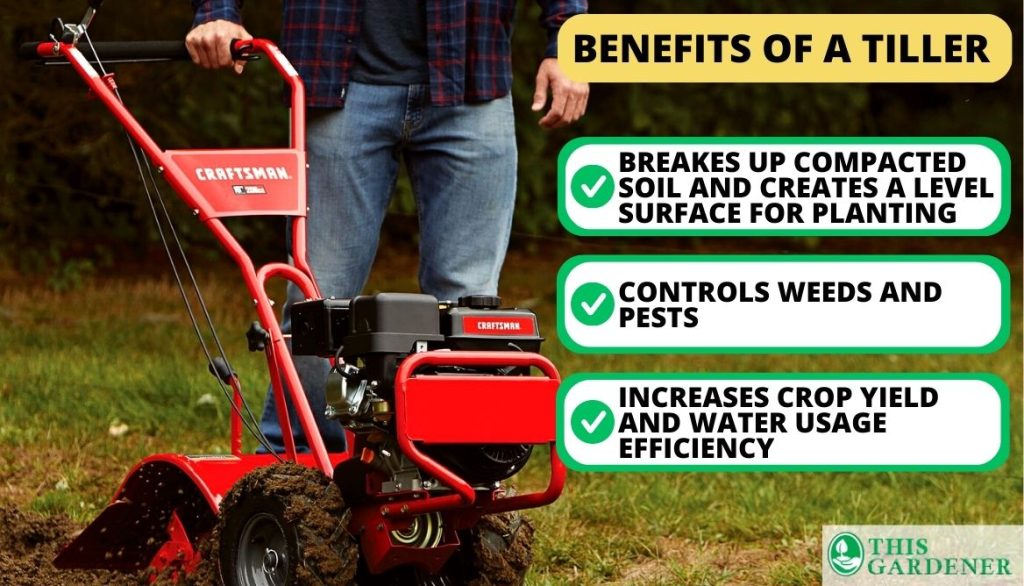
You have a lot of choices in the size of the tillers, from small handheld models to larger, tractor-mounted machines. Tilling is an essential process for gardeners to create an optimal environment for plant growth.
How To Start a Tiller With a Choke: The Easy Way
Starting a tiller with a choke may seem intimidating at first, but it’s actually a straightforward process. A lot of people don’t know the correct procedure of how to start a tiller with a choke. It is a small valve located near the carburetor that restricts airflow to the engine, making it easier to start in cold weather.
So, these are the basic steps to follow:
1. Use a Flat Surface Level
It is best to make sure that you park the tiller on a flat surface. This is important because it prevents the tiller from tipping over in the startup process.
2. Locate the Choke Control
The next that you need to do is to find the choke control of the tiller.
[su_list icon=”icon: chevron-circle-right” icon_color=”#00cf77″]
- It is usually a button or a lever that is responsible for controlling the airflow to the tiller.
- You can typically find it near the carburetor.[/su_list]
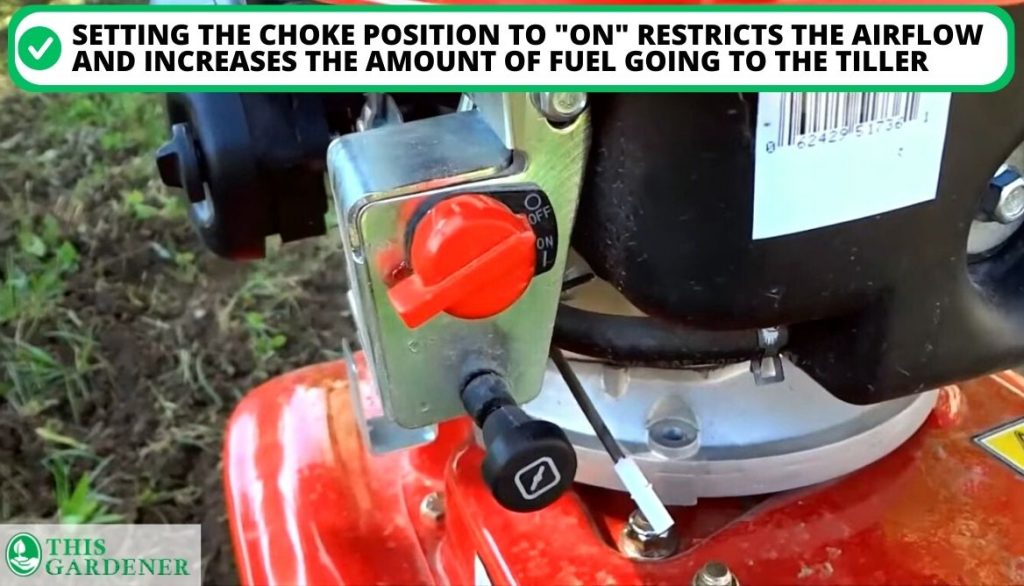
3. Set the Choke Position
Now, what you want to do is to set the choke position to on.
[su_list icon=”icon: chevron-circle-right” icon_color=”#00cf77″]
- Doing this restricts the airflow and increases the amount of fuel going to the tiller.
- This is best for starting the engine in cold weather.[/su_list]
4. Press Primer Bulb Multiple Times
When you press the primer bulb multiple times, it ensures that more fuel is going from the fuel tank. Continue pressing on the bulb until you see the fuel in the primer line.
5. Grip the Starter Rope
After you see the fuel going into the primer line from the fuel tank, you need to grip the starter rope. Firmly grip it with one hand.
6. Adjust the Choke Lever
While holding the rope, you need to adjust the choke. After adjusting to the correct position, move on to the final step to start the tiller.
7. Adjust the Throttle
Now, you need to move the throttle trigger to the start position.
[su_list icon=”icon: chevron-circle-right” icon_color=”#00cf77″]
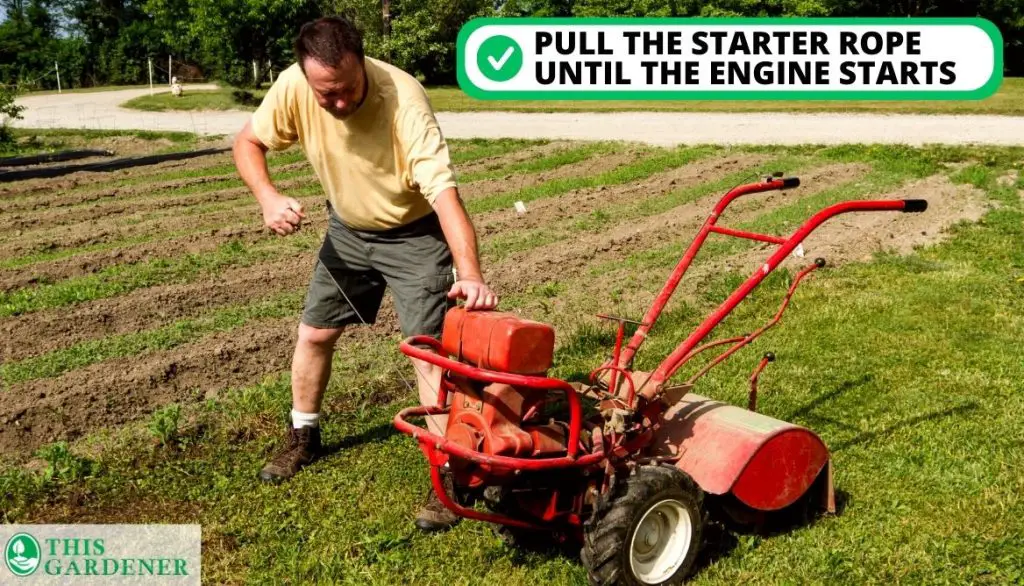
- This will provide the one-tiller engine with gas. Start to pull the starter rope to start the engine.
- If the engine doesn’t start, wait for a bit and then try again until the engine catches.[/su_list]
How To Start a Tiller With a Choke: Refer to the Manufacturer’s Instructions
Once you’ve managed to start the engine, adjust the throttle selector once again. If you are having any sort of trouble, then you can take guidance from the manufacturer’s instructions.
Issues Related to Tiller not Starting
When spring comes, a lot of homeowners tend to pull out their tillers to till the ground. They add gasoline to the tiller’s fuel tank, and engine oil, and pull the rope but the engine doesn’t start. A lot of the failures in starting the tiller in the spring season are mainly due to issues with the air cleaner, and problems in either the ignition or the gas system.
We have discussed some of the most common troubleshooting regarding how to start a tiller with a choke down below:
Draining Old Gasoline
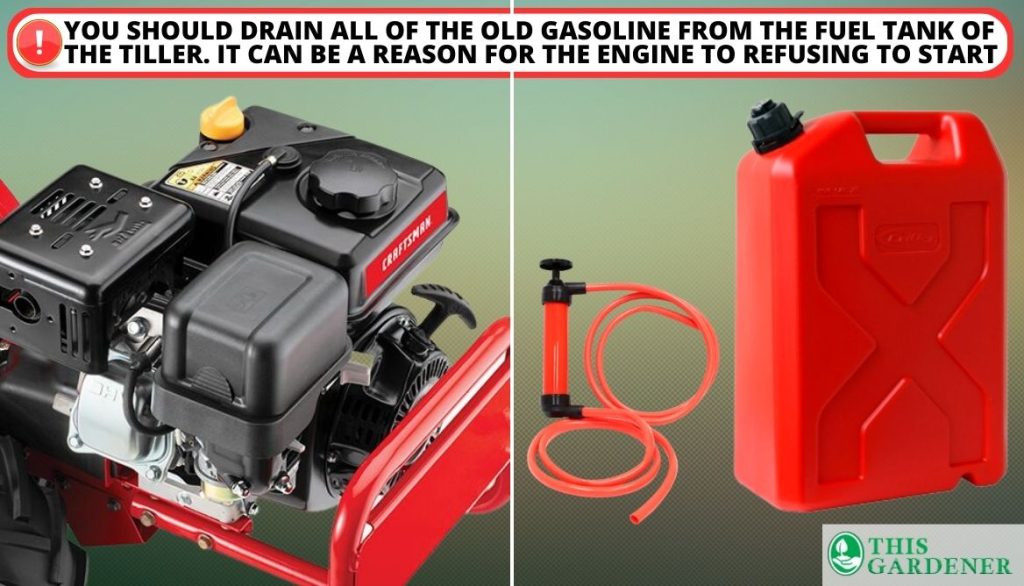
If there is old gasoline present in the fuel tank, then it can be a reason for the engine to upright refusing to start. In such a case, when you have gasoline from the previous season present inside the tiller.
[su_list icon=”icon: chevron-circle-right” icon_color=”#00cf77″]
- You should drain all of the gasoline from the fuel tank of the tiller.
- In addition to that, you should also make sure that the bolts securing the intake manifold are tight.
- All of the fuel connections should be secured.
- While you are doing this, also check on the oil as well. If there is a low amount of oil then the engine won’t start up. So, make sure to change the oil as well.[/su_list]
Checking the Ignition and Spark Plug
You should take the following things into consideration:
Switch Position
When there is a shutoff switch on the tiller, then you should keep it in the “On” position. This is crucial when trying to power up the engine. All of the switches need to be in their correct position when you try to pull the starter rope.
Spark Plug
You should also check the spark plug as well.
[su_list icon=”icon: chevron-circle-right” icon_color=”#00cf77″]
- One thing that you can do is remove the spark plug from the engine, and touch the bare metal of the spark plug to the engine.
- This should generate a spark due to the electrodes in the spark plug.
- If you are not seeing a spark or it is a very weak spark, then you should replace the spark plug with a newer one.
- You should get a visible spark when you touch it with another metal. So, it is also a good thing to replace your older plug just to be on the safe side.[/su_list]
Filling the Tank
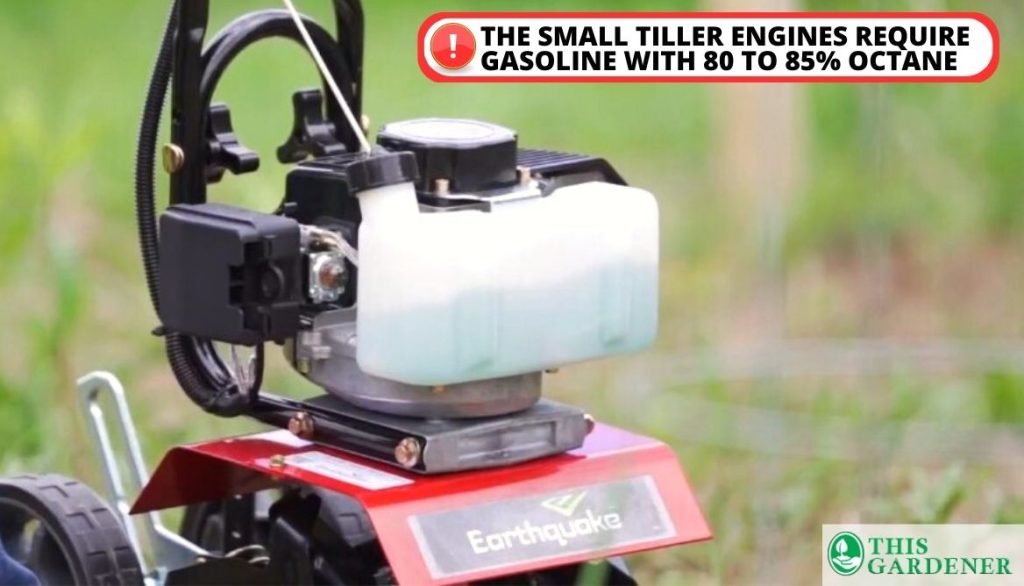
A tiller’s fuel tank requires gasoline with the right octane rating to start. This is a really important factor that people tend to miss.
Optimum Combination
The small tiller engines require gasoline with 80 to 85% octane. When the tiller has a fuel shutoff, set it to open. If it is two-cycle, then fill up the tiller’s fuel tank with fresh gasoline.
Checking out the Exhaust
One other way of checking whether gasoline is reaching the cylinder from the fuel tank is by looking at the exhaust. But before you take a peek at it, try to start the engine a few times.
[su_note note_color=”#64F57D” text_color=”#000000″]Note: If the gasoline is flowing through the fuel tank then you will see gasoline fumes. Don’t forget to check the oil level as well.[/su_note]
Checking Vents and Screens
The last method that you should try is to check the vents and screens.
[su_list icon=”icon: chevron-circle-right” icon_color=”#00cf77″]
- If gas is not getting to the cylinder, then make sure that all of the tanks are clear and that the fuel line is open or not.
- Also, check the air cleaner as it is a very important part of the tiller’s motor.
- If it is not clean, then it can make way for a lot of filth to get inside.[/su_list]
[su_note note_color=”#64F57D” text_color=”#000000″]Important Note: A dirty air cleaner restricts the air intake so much that the engine doesn’t even start. In such a case, you should clean it out and make sure there is no dirt present.[/su_note]
FAQ
Where is the choke on a tiller?
Why is my tiller engine not starting?
How do you start a choke?
What does the choke do on a tiller?
How do I start a small garden tiller?
Conclusion
Understanding how to start a tiller with a choke safely and effectively is sometimes crucial for preparing the soil for planting. Gardeners can troubleshoot common issues and start their tillers with confidence by knowing the basic components of the machine, such as the throttle, air cleaner, on/off switch, and fuel valve.
As you begin your gardening journey, what other questions do you have about operating a tiller or other gardening tools? Share them in the comments section below.
Leave a Reply